Skip to content
  • Home
  • About Us
    • About Us
    • Meet the Team
  • Practice Areas
    • Commercial & Business
      • Commercial & Business Law
      • Business Partnership Disputes
      • Building & Construction Law
    • Family Law
      • Family Law
      • Family Law Involving Business
    • Wills + Estates
      • Wills + Estates Overview
      • Wills + Planning
      • Managing an Estate
      • Will + Estate Disputes
    • Conveyancing
      • Conveyancing + Property Law
      • Conveyancing Quote
      • Real Estate Agents
    • Criminal + Litigation
      • Litigation
      • Criminal + Traffic Law
  • Resources
    • Advice + Articles
    • Free Legal Health Check
    • Toolkits & Guides
    • Legal Fees & Costs
    • Help Choosing a Law Firm
    • 10 Awkward Questions
  • Contact Us
  • Home
  • About Us
    • About Us
    • Meet the Team
  • Practice Areas
    • Commercial & Business
      • Commercial & Business Law
      • Business Partnership Disputes
      • Building & Construction Law
    • Family Law
      • Family Law
      • Family Law Involving Business
    • Wills + Estates
      • Wills + Estates Overview
      • Wills + Planning
      • Managing an Estate
      • Will + Estate Disputes
    • Conveyancing
      • Conveyancing + Property Law
      • Conveyancing Quote
      • Real Estate Agents
    • Criminal + Litigation
      • Litigation
      • Criminal + Traffic Law
  • Resources
    • Advice + Articles
    • Free Legal Health Check
    • Toolkits & Guides
    • Legal Fees & Costs
    • Help Choosing a Law Firm
    • 10 Awkward Questions
  • Contact Us
Advice & Articles

The Executor is Taking Too Long: What to Do – How to Handle Executor Delays in Estate Administration

  • Published: 15 August 2024
  • Last Updated: 15 August 2024

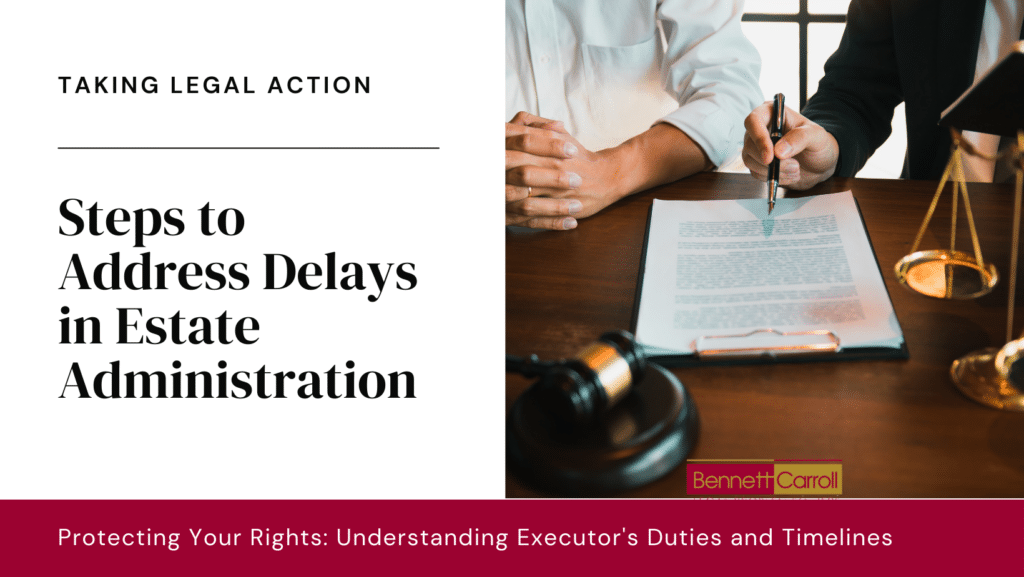
The role of an executor is crucial in ensuring that the wishes of the deceased are fulfilled and their estate is distributed according to their will. However, executor delays in the estate administration process can sometimes take longer than expected, leading to frustration and concern among beneficiaries. If you find yourself dealing with an executor taking too long, understanding your rights and the legal options available to beneficiaries in Queensland is essential.


Understanding the Executor’s Role

An executor has several responsibilities, including:

  • Collecting and managing the estate’s assets.
  • Paying any debts and taxes owed by the estate.
  • Distributing the remaining assets to the beneficiaries according to the will.

Given the complexity of these tasks, it is not uncommon for the process to take several months or even years, depending on the estate’s size and complexity. However, if the delay seems excessive or unjustified, it may be necessary to take action.


Reasons for Delays

Before deciding on your next steps, it is important to understand potential reasons for the delay:

Complexity of the Estate: Larger or more complex estates naturally take longer to administer.

Locating Assets: Finding and valuing all assets can be time-consuming, especially if they are spread across different locations or are difficult to value.

Outstanding Debts and Taxes: Settling debts and ensuring all taxes are paid can delay the distribution.

Disputes Among Beneficiaries: Conflicts between beneficiaries or challenges to the will can significantly slow down the process.

Executor’s Personal Circumstances: Executors may face personal issues or lack the necessary expertise, leading to delays.


Steps to Address Delays

If you believe the executor is taking too long, consider the following steps:

  1. Communicate with the Executor

Start by discussing your concerns with the executor. They may be able to provide a reasonable explanation for the delay and give you a timeline for when the estate will be finalised.

  1. Request an Update

You have the right to request updates on the progress of the estate administration. A written request can be more effective, as it creates a record of your concerns.

  1. Seek Mediation

If communication with the executor does not resolve the issue, consider mediation. A neutral third party can help facilitate a constructive conversation and find a solution that satisfies all parties involved.

  1. Consult a Solicitor

If the delay persists and you believe it is unreasonable, consulting a solicitor who specialises in wills and estates is advisable. They can provide legal advice on your specific situation and suggest potential actions.


Delays in estate administration can be frustrating for beneficiaries, but understanding the reasons behind the delay and taking appropriate steps can help resolve the issue. Start with open communication and mediation, but do not hesitate to seek legal advice if necessary. The legal system in Queensland provides mechanisms to address unreasonable delays, ensuring that the estate is administered fairly and efficiently. Remember, the goal is to honour the wishes of the deceased and ensure a fair distribution of their assets.


If you require legal advice or representation in any legal matter, please contact Bennett Carroll Solicitors. We have offices in Brisbane (Stafford and Upper Mount Gravatt), Gold Coast (Mermaid Beach) and Sunshine Coast (Kawana/Birtinya).


See also:
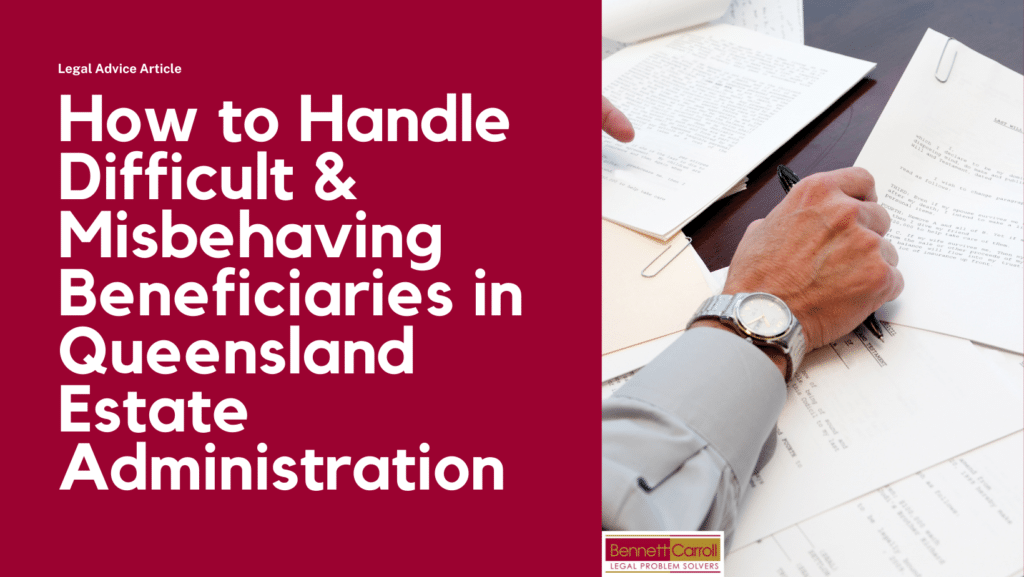
The Executor is Taking Too Long: What to Do - How to Handle Executor Delays in Estate Administration

The Executor is Taking Too Long: What to Do - How to Handle Executor Delays in Estate Administration

The Executor is Taking Too Long: What to Do - How to Handle Executor Delays in Estate Administration

Related Articles

Navigating Executor's Commission in Queensland? This comprehensive guide explains executor payment in QLD for administering a deceased estate. Learn how commission is approved by agreement with beneficiaries or via the Supreme Court of Queensland. We detail factors the Court considers (estate size, asset complexity, time, and legal responsibility), typical commission amounts/benchmarks, and the difference between commission and expenses. Crucial advice for executors and beneficiaries across Brisbane, Stafford, Upper Mount Gravatt, Kawana, Mermaid Beach, & Ipswich. Understand tax implications and when to seek expert legal guidance from our estate administration lawyers regarding probate and executor remuneration claims. Get clarity on your rights regarding deceased estates and executor fees in QLD.

Executor’s Commission in Queensland: A Guide to Fees, Court Approval, and Executor Remuneration

Best Estate Planning Structures for Business Owners in Queensland

Protecting Your Wishes – Your Will in Queensland | Wills & Estate Planning Lawyers | Bennett Carroll Solicitors

Understanding Wills: What You Need to Know to Protect Your Estate

Enduring Power of Attorney (EPOA) Queensland – Crucial Estate Planning for 2026 The Description: Secure your future with an Enduring Power of Attorney (EPOA) in Queensland, the essential legal document often overlooked in standard estate planning. Unlike a General Power of Attorney, an EPOA "endures" beyond your loss of decision-making capacity, ensuring that a trusted attorney can manage your financial matters, personal care, and health decisions according to your wishes. Without a valid EPOA Form 2 (Short Form) or Form 3 (Long Form), your family may be forced into costly and stressful proceedings at the Queensland Civil and Administrative Tribunal (QCAT) to appoint a guardian or administrator. This comprehensive guide from Bennett Carroll Solicitors explores the vital role of the Powers of Attorney Act 1998 (QLD), the difference between immediate financial authority versus capacity-triggered powers, and how to choose an attorney who understands your values. Whether you are navigating dementia planning, protecting property assets in Brisbane, or ensuring your Advance Health Directive is supported, a professionally drafted EPOA is your ultimate safeguard against elder abuse and legal uncertainty. Don't leave your legal health to chance—learn why every adult over 18 in the Gold Coast, Sunshine Coast, and across Queensland needs this rock-solid protection as part of their succession planning.

Enduring Power of Attorney in Queensland: The Crucial Document Most People Overlook in their Estate Plan

Inheriting Property: A Guide to Dealing with Real Estate in Deceased Estates in Queensland- Legal Advice

This information is provided for general informational purposes only and does not constitute legal advice. Please consult with a qualified lawyer for advice regarding your specific situation.

PrevPreviousNavigating Business Closure- A Guide to Shutting Down Your Business
NextNavigating Financial Separation: Selling the Family Business and Dividing AssetsNext
Serving Clients Across Queensland
Bennett Carroll Solicitors is a proud member of the Queensland Law Society (QLS)

Practice areas

  • Commercial + Business
  • Litigation
  • Family Law
  • Wills + Estates
  • Conveyancing
  • Building + Construction Law
  • Criminal + Traffic

learn more

  • About Us
  • Meet the Team
  • Advice + Articles
  • Contact Us
  • LinkedIn
  • Instagram
  • Facebook

Our Office Locations in SEQ - click to view

  • Brisbane North - Stafford
  • Brisbane South - Upper Mount Gravatt
  • Sunshine Coast - Kawana Waters
  • Gold Coast - Mermaid Beach
  • Ipswich- By Appointment Only
  • Brisbane Central- By Appointment Only

Get In Touch

  • 1300 334 566
  • Click to Email
  • 8.30am - 5pm Monday - Friday
  • Chat With Us (Bottom of this page)
  • Bennett Carroll Solicitors
  • 1300 334 566
Copyright 2025 © Bennett Carroll. All rights reserved.